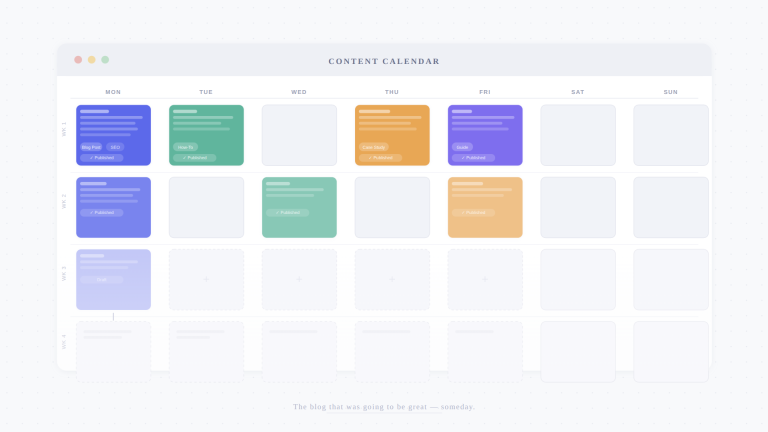
A marketing dashboard can show you that your company blog has gone quiet. It cannot, by itself, get the next article published. For a small business without dedicated marketing staff, the missing piece is often not more information. It is a reliable way to get essential work done without making the owner manage every step.
More visibility does not always mean more progress
Dashboards are useful when they help someone make a decision. But adding charts, alerts, and settings can also create another job: interpreting the information and deciding what to do about it.
Consider a plumbing company owner checking a marketing platform between appointments. Website visits are down, one article has received more impressions, and an email report suggests testing a different subject line. Each observation opens another question. Does something need fixing? Is the change meaningful? Which task deserves attention first?
Meanwhile, the company’s seasonal maintenance article is still unwritten.
The dashboard has made activity visible, but it has not resolved the operational problem. Someone still needs to choose a topic, prepare the content, check the details, and publish it.
When time is limited, monitoring the work can displace doing the work.
Every setting creates a decision someone must own
Customization sounds helpful because businesses have different needs. Some choices are essential: the audience, the budget, the services being promoted, and the claims a business is comfortable making.
Other choices may add little value to a small operation. An owner may not need several report layouts, frequent optimization prompts, or separate performance targets for every minor activity.
The burden is not just learning the software. It is repeatedly deciding whether to intervene. That can lead to decision fatigue: spending attention on small choices until more important work gets delayed or avoided.
A useful test for any metric or setting is: What would I do differently because of this? If there is no clear answer, it probably does not need a place in your routine review.
Marketing professionals have a different job
Advanced dashboards are not inherently unnecessary. A marketing manager overseeing several campaigns may need detailed comparisons to allocate spending, investigate weak performance, and explain results to leadership.
In that situation, analysis is part of the job. The person reviewing the data has the time, experience, and authority to act on it.
An owner who also handles staffing, sales, and customer service has different requirements. They may need to know whether inquiries are arriving, spending is within budget, and planned marketing work is happening—not inspect every available measurement.
The distinction is about responsibility, not business size alone. A small online retailer relying heavily on paid advertising may need close performance monitoring. A service business maintaining a modest website and blog may need a much simpler setup.
Choose tools around completed work
Before comparing features, describe the job you want completed in ordinary language:
- Publish useful articles that answer recurring customer questions.
- Send an approved customer update on schedule.
- Keep business hours and service information accurate.
- Notify the right person when a website inquiry arrives.
These are clearer buying criteria than “better marketing visibility.” They let you ask whether a tool completes the task, helps someone complete it, or merely reports that it remains unfinished.
For example, a content calendar can organize planned articles. That is useful if someone is available to write and publish them. If nobody has that responsibility, a more detailed calendar will not solve the staffing gap.
Look for sensible defaults, a clear setup process, and notifications when something actually needs attention. Keep control over consequential decisions, including budgets, business facts, and sensitive claims. Routine steps should not require repeated confirmation without a good reason.
Also distinguish completed work from business results. An article being published is a delivery outcome. An inquiry or sale is a business outcome. Tools can help make delivery more consistent, but publication alone does not guarantee traffic or customers.
Keep enough measurement to make useful decisions
Reducing dashboard use should not mean ignoring performance. A simpler approach is to keep a small set of checks tied to specific decisions.
- Delivery: Did the planned work happen? If not, fix the process or clarify who owns it.
- Quality: Is the information accurate, relevant, and appropriate for customers? If not, revise the instructions or review process.
- Business response: Are relevant inquiries, bookings, or purchases coming through? Review trends alongside costs and customer feedback before changing direction.
Match the review schedule to the risk. A monthly review may be practical for routine blog publishing. Advertising spend or a broken inquiry form may require much faster attention.
Where possible, reserve alerts for exceptions that need action. A failed publication deserves a different level of attention from a small day-to-day change in website visits.
Audit the attention your tools require
Before adding another platform, review the ones you already use. For each, write down the work it completes, the decisions it supports, and the time it requires from you.
Keep reports that inform real choices. Reduce notifications that repeatedly produce no action. If an essential task remains undone, identify whether the gap is ownership, time, expertise, or execution before buying more reporting.
The right tool does not have to keep drawing you back into its interface. It should make necessary work more dependable while leaving you enough visibility to notice problems and enough control to correct them.
Keep reading
More articles on the same topic.